
In Italy (and Europe as a whole), waste-to-energy is a common treatment for residual waste (things that can’t be recycled or composted) because it saves landfill space and allows you to reclaim some energy from materials. So today we visited a facility that burns industrial and municipal waste to create energy. Their municipal treatment currently isn’t running because they’re upgrading it, but the industrial waste treatment was still active. Upon arriving at the facility, we dawned safety gear and masks. It smelled awful but the smell was actually coming from a nearby wastewater treatment plant. Annalisa was unphased by this. Here’s a photo journey through this plant:

A pile of waste waiting to be burned. I thought the toy truck was cute.

The area where trucks drop off trash. I usually try to shield you guys (my readers) from the nastier-looking trash, but today I guess I’ll include it.

These things are like rain machines and they cool the water that’s used to cool the equipment in the plant. (Not the same water that’s used in the boilers.)

The plant has a system of deionizing water and because the water used in the boilers can’t have any minerals or it will scale over.

The control center where they monitor the incineration process. Pic features a guy whose all-green outfit reminded me of Luigi.

Blurry picture but in the background there’s a rotating cylinder where the industrial waste is burned. I was disappointed I never got to see anything on fire.

Piles of ash leftover from burning. The ash from the industrial waste (left) was noticeably darker than the municipal waste (right).

This guy was walking around with us and I thought he looked really cool in his safety gear.
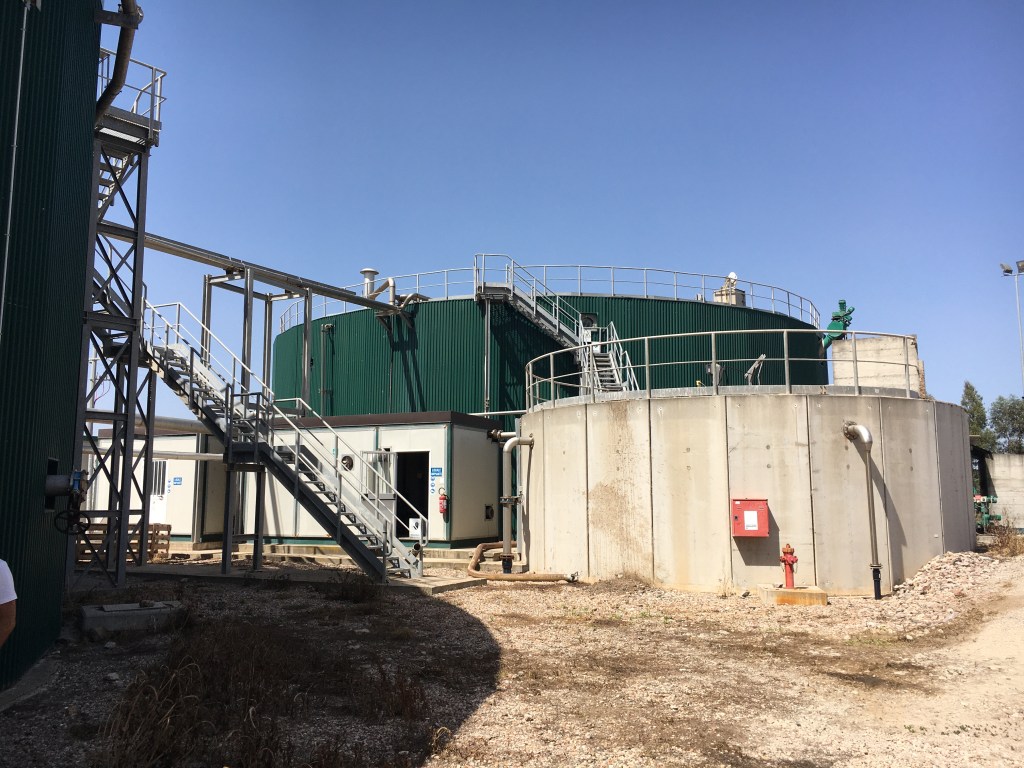
After the waste plant tour, we went to a farmhouse for lunch. Annalisa specifically requested that they serve us a meal that would not take three hours so that was nice. Then we toured the farm’s on-site anaerobic digestion plant. This plant uses waste from the farm and also imports waste from nearby farms. It produces methane which is burned for electricity and the excess heat is captured and used to heat the fields so they can keep growing crops in the winter. I did see a cat during the tour but it ran away too quickly for me to get a picture.

We got on the bus to go back to Cagliari and it was literally the hottest car ride I’ve ever experienced. The bus had been sitting in the sun for hours, we were all wearing long pants for the site visit, and the AC was not working. Awful.
Buona Notte

 Jessamyn Goes Places
Leave a comment